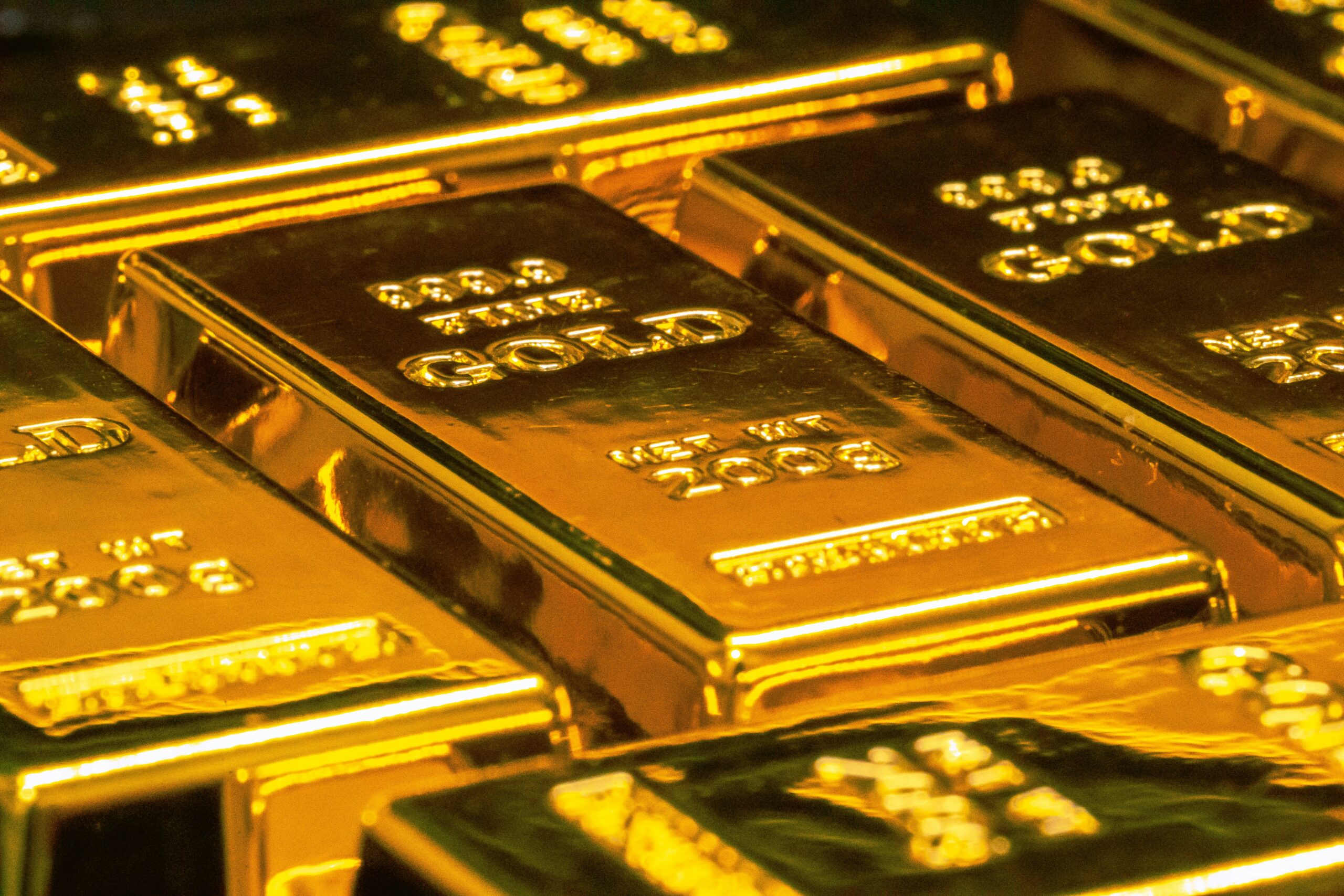
In a market year defined by unprecedented volatility, the “yellow metal” has just delivered its most stunning reversal. Just days ago, gold was on an unstoppable ascent, shattering records daily until it hit a monumental peak of nearly $4,381 per ounce. Then, the market blinked.
What followed was a swift, brutal, and historic correction. In a move described by some as a “flash crash,” gold suffered its most significant one-day percentage drop in years, plummeting by over 5% and sending ripples of panic across trading desks.
Was this the end of the 2025 gold bull run? Was the world’s most venerable safe-haven asset finally succumbing to gravity? The short answer from nearly all major analysts is a resounding NO.
This wasn’t a crisis. It was a tectonic shift—a necessary expulsion of speculative froth—that has now presented a compelling opportunity for investors who missed the first leg of the historic rally.
The Anatomy of a Crash: How Gold Lost $200+ in a Day
To understand the panic, you must first appreciate the frenzy that preceded it. The 2025 gold rally was a masterpiece of fundamental and technical drivers, propelled by a perfect storm of global anxieties.
The Foundations of the Frenzy (Pre-Crash)
For months, the market was in a state of extreme anticipation, with five key pillars driving gold to its all-time high:
- The “Pivot” Bet (Rate Cuts): The strongest belief driving gold was the expectation that the U.S. Federal Reserve would continue to ease its monetary policy. Gold, a non-yielding asset, thrives when real interest rates (interest rates minus inflation) fall, as the opportunity cost of holding it decreases. Markets are betting on continued rate cuts through 2026.
- Geopolitical Turbulence: Persistent high-level tensions, combined with fears over the ongoing U.S. government shutdown, propelled investors into the ultimate safe-haven. Geopolitical crises historically drive gold up, but the sustained nature of the current global friction created a permanent risk premium.
- The Central Bank Buying Spree: Unlike retail investors, central banks are strategic, long-term buyers. Institutions like the People’s Bank of China and the Reserve Bank of India have been aggressively accumulating gold to diversify their reserves away from the U.S. Dollar. This institutional, structural demand is a powerful force that has created a floor for prices.
- U.S. Dollar Weakness: Gold is priced in U.S. Dollars globally. When the Dollar weakens, it takes more Dollars to buy an ounce of gold, making it cheaper and more attractive for holders of other currencies.
- Technical Momentum & ETF Inflows: As the price breached key psychological barriers—first $4,000, then climbing towards $4,400—algorithmic and momentum-driven trading systems piled in. Exchange-Traded Funds (ETFs) saw historic inflows, pushing the market into severely “overbought” territory.
The Trigger: The Sudden Shift in Sentiment
The market was a powder keg, needing only a tiny spark. That spark arrived in the form of improved risk appetite driven by:
- Trade Thaw Hopes: Rumors and signals of easing trade tensions between the U.S. and China were a major factor. The mere possibility of de-escalation led investors to momentarily step back from safe-haven assets.
- The Technical Break: After the monumental run, the market reached a point of “altitude sickness.” Large-scale profit-taking began, which triggered a cascade of algorithmic selling as technical support levels failed. This forced liquidation of overcrowded positions turned a healthy correction into an abrupt crash.
- A Stronger Dollar: A short-term rebound in the U.S. Dollar made gold momentarily more expensive for foreign buyers, further dampening demand at the peak.
In essence, the “crisis” wasn’t a fundamental failure of gold’s value proposition. It was a classic market flush-out—a sharp, necessary correction to balance an over-leveraged, overheated market.
The Big Picture: Gold’s Bull Run Is Far From Over
While the recent price action felt like a crisis, the facts confirm that gold’s structural tailwinds—the reasons the price went up to $4,381 in the first place—remain firmly in place.
Fact 1: The Historical Context
Despite the dramatic plunge, gold is still positioned for one of its strongest years on record, up more than 50% since January. This performance is a clear indicator that the dominant market theme is still bullish. Analysts note that gold’s current rally, when compared to the duration and magnitude of previous bull markets, still has room to run. A 10% correction from its peak, while painful, is entirely healthy and does not invalidate the long-term trend.
Fact 2: The Enduring Fed-Risk Dynamic
The core macro driver is intact. The market is still widely anticipating further easing by the Federal Reserve, which translates directly to lower real yields—gold’s best friend. Furthermore, the underlying concerns about sovereign debt and the long-term health of the global financial system have not been resolved. Gold remains the preferred hedge against financial and monetary instability.
Fact 3: The $5,000 Target Becomes Real
The most compelling argument for seeing the recent dip as an opportunity lies in the updated, extreme price forecasts issued by major institutional banks. These are not merely speculative retail predictions; they are based on deep analysis of market flows and monetary policy.
| Institution | Price Target | Target Date | Key Driver |
| Bank of America | $5,000/oz | 2026 | Geopolitical Risks, Institutional Demand |
| Goldman Sachs | $4,900/oz | Dec 2026 | Sustained ETF & Central Bank Demand |
| UBS | $4,700/oz | Q1 2026 | Lower Real Rates, Monetary Policy Shifts |
| Societe Generale | $5,000/oz | End of 2026 | Continued Geopolitical & Policy Uncertainty |
These aggressive targets are predicated on the assumption that a small portion of capital—perhaps just 1%—shifts from the bond market (like the U.S. Treasury market) into gold. Given the scale of global debt and investor fatigue with low-yielding fixed income, this rotation is highly plausible.
Investor Takeaway: Is This the “Buy-the-Dip” Moment?
For those who have been sitting on the sidelines, nervous about buying at all-time highs, the recent correction may be the opportunity they were waiting for.
Short-Term View: Consolidation and Volatility
The immediate outlook is likely to involve consolidation and continued volatility. Traders will be keenly watching the next batch of U.S. economic data, including the delayed Consumer Price Index (CPI) print, which will offer new clues on the Fed’s path. Key technical support levels are being watched in the $4,000–$4,100 range. If the price holds above this band, it signals underlying strength.
Long-Term View: The Structural Case
The structural case for gold remains robust. The market is transitioning from a cyclical trade to a secular trend—a long-term, non-reversible shift driven by a complex interplay of forces:
- De-Dollarization Efforts: The concerted effort by several nations to diversify their reserves is a generational macro trend that will continue to underpin gold demand.
- The Inflation/Stagflation Hedge: Gold is a crucial hedge for the unique mix of high inflation and low growth (stagflation) risks currently facing the global economy.
- Retail and Western ETF Revival: After years of dormancy, Western institutional and retail interest in gold ETFs has returned with vigor, adding fresh capital to the market.
Conclusion: A Tactical Retreat, Not a Rout
The dramatic drop from $4,381 was a powerful reminder that no asset moves in a straight line forever. It was a tactical retreat driven by technical factors and profit-taking after an unsustainable surge. The fundamental reasons for gold’s spectacular 2025 performance—the Fed’s policy trajectory, persistent geopolitical risk, and unceasing central bank demand—are still very much active.
The recent volatility has simply shaken out the weak hands and reduced the technical “overbought” pressure. For long-term investors aiming for the $5,000 targets, this dip is less a crisis and more a welcome, and perhaps final, chance to secure a position in a metal that is defining the current era of financial uncertainty.
Disclaimer: This summary is for informational purposes only and does not constitute financial advice. Past market performance does not guarantee future results. Investors should conduct their own due diligence before making any investment decisions.